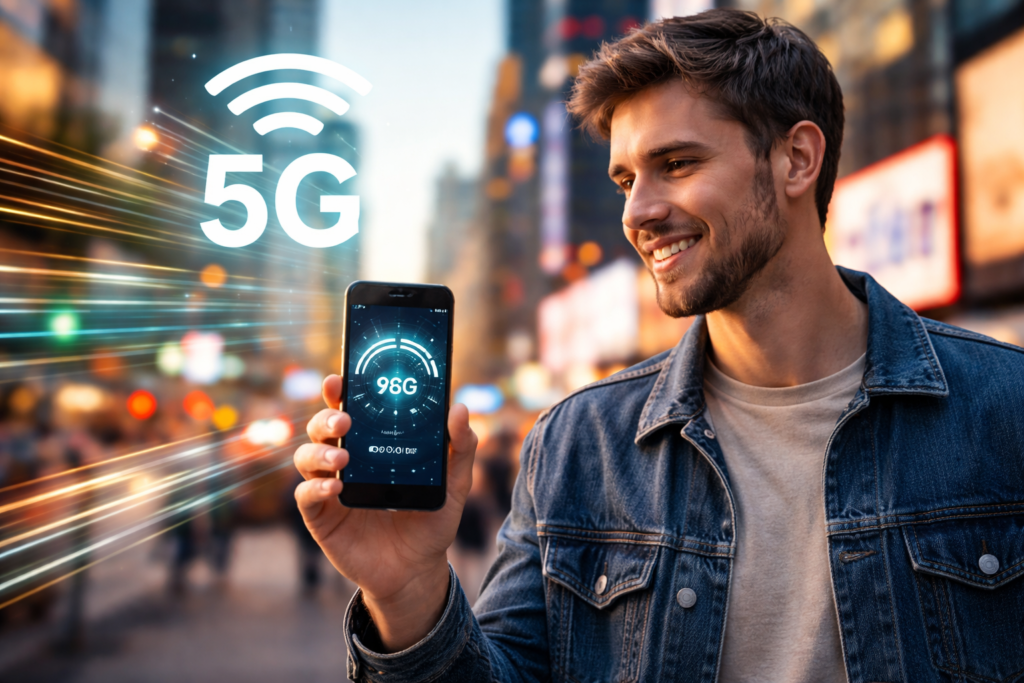
A few years ago, 5G felt like a promise more than a reality. Fast ads, bold claims, and spotty coverage made it hard to tell whether anything had truly changed. By 2026, that uncertainty is mostly gone. 5G has settled into everyday life, quietly reshaping how mobile internet feels rather than loudly advertising itself.
What stands out now is not just raw speed. It’s consistency. Pages load without hesitation. Video calls stay sharp even when networks are crowded. Mobile internet feels less like a compromise and more like a dependable utility.
From “Faster Than 4G” to a Core Network Layer
The biggest shift in 2026 is how mature the network has become. 5G is no longer an experimental upgrade layered on top of older systems. It now carries a significant share of global mobile data traffic, with adoption accelerating as infrastructure stabilizes.
Instead of occasional bursts of high speed, users experience steady performance throughout the day. This change comes from better spectrum use, smarter traffic management, and wider deployment of mid-band frequencies that balance speed and coverage.
Real-World Speed Benchmarks in 2026
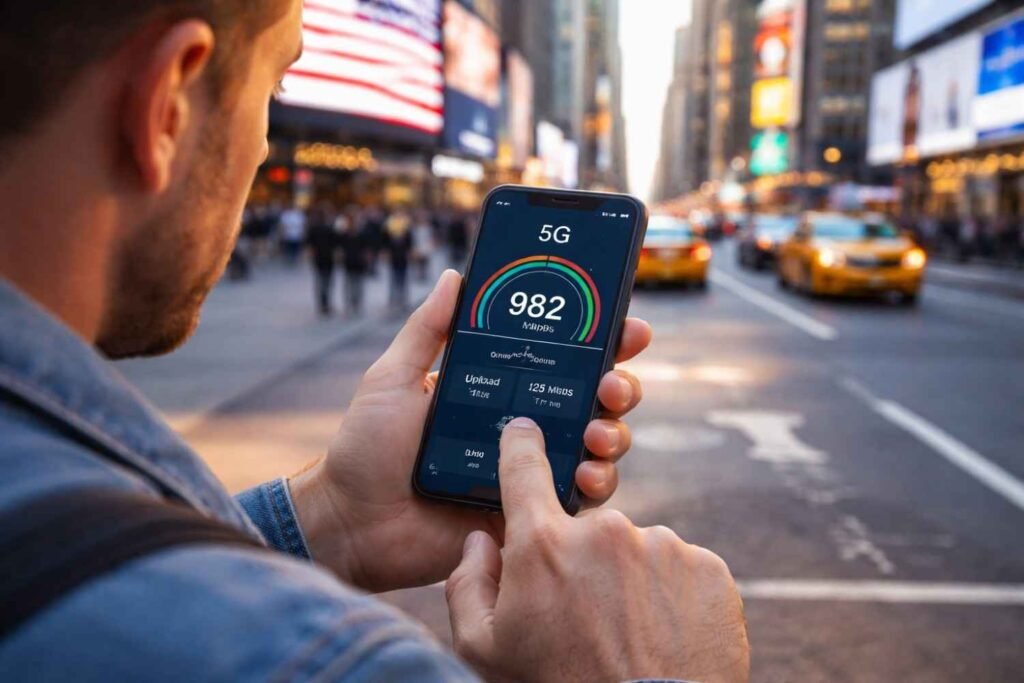
Marketing numbers once dominated the 5G conversation. Today, real-world benchmarks matter more.
In daily use, mobile internet speeds follow a tiered pattern based on spectrum availability and network load.
Most people in cities and suburbs now see download speeds ranging between 150 Mbps and 700 Mbps during normal conditions. That’s several times higher than what 4G typically delivers, even at its best.
In ideal environments, especially near millimeter wave nodes, peak speeds can climb into the multi-gigabit range. These extreme cases are not constant, but they demonstrate the network’s ceiling rather than a rare fluke.
Uploads have also improved. Average upload speeds are roughly 30 percent faster than 4G, which makes a real difference for creators, remote workers, and anyone relying on high-quality video calls.
Latency: The Most Noticeable Change
Speed grabs attention, but latency defines how responsive the internet feels.
In 2026, latency has dropped dramatically. Where 4G often sat between 30 and 50 milliseconds, modern 5G connections can operate in the 1 to 5 millisecond range under optimized conditions.
That reduction removes the subtle lag people once accepted as normal. Cloud gaming feels immediate. Voice and video calls respond instantly. Interactive apps behave more like local software than remote services.
This low latency is also what allows emerging applications to function reliably, including real-time navigation systems and remote-controlled devices.
Capacity That Holds Up Under Pressure
Crowded networks used to mean slow speeds. Stadiums, downtown events, and transit hubs were notorious dead zones.
5G addresses this problem through massive device capacity. The network can support up to one million connected devices per square kilometer without collapsing under demand. That capacity keeps speeds stable even when thousands of people connect at once.
Another quiet improvement comes from automation. By 2026, many networks rely on AI-driven management systems that detect congestion early and reroute traffic before users notice a slowdown. The result is a smoother experience that rarely requires manual intervention.
A newer standard, often called 5G-Advanced, builds on this foundation. It improves indoor coverage, refines handoffs between cells, and enables more accurate location awareness for navigation and services.
How 5G Changes Everyday Mobile Use
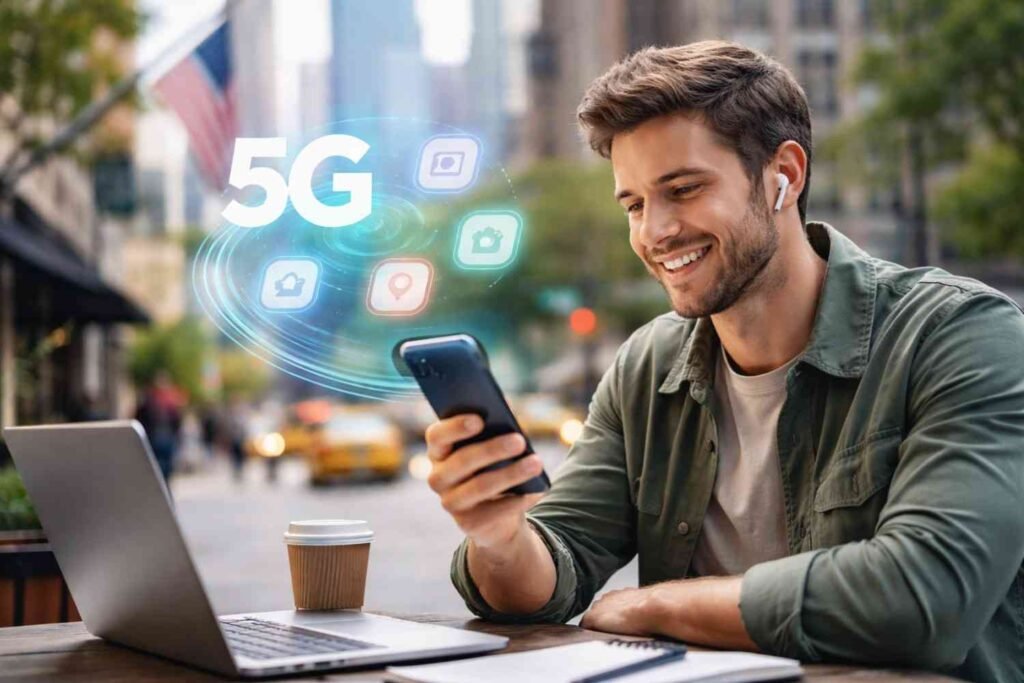
These technical gains translate into practical benefits that show up throughout the day.
Streaming services adapt instantly to higher quality without buffering. Large app downloads finish in seconds instead of minutes. Cloud storage syncs happen quietly in the background.
For work, mobile hotspots have become far more reliable. Video meetings stay stable even when tethered through a phone. File uploads no longer stall halfway through.
Gaming benefits as well. Reduced latency and consistent throughput make competitive play viable over mobile connections, something that felt unrealistic just a few years ago.
Fixed Wireless and the Home Internet Shift
One of the most significant changes tied to 5G speed is its role beyond phones.
Fixed Wireless Access has become a practical replacement for traditional broadband in many areas. Services like Verizon’s 5G Home Internet deliver fiber-like performance without physical cables. Installation is faster, and coverage expands into places where wired infrastructure was limited.
For many households, this means fewer service interruptions and more flexibility. Speeds remain strong during peak hours, and latency stays low enough for streaming, work, and gaming.
Reaching Areas Once Left Behind
Coverage expansion has also reshaped connectivity in rural regions. Deploying fiber remains expensive and slow in remote areas, but 5G provides a faster alternative.
By extending mid-band coverage and using fixed wireless solutions, providers can deliver high-speed access where it was previously unavailable. This shift narrows the digital divide and makes mobile internet a viable primary connection.
Another layer adds resilience. Some smartphones released around 2026 can switch to satellite links when cellular service disappears entirely. While speeds drop in those scenarios, basic connectivity remains available, which matters for safety and communication.
4G vs 5G: A 2026 Snapshot
The difference between the two generations is clear when viewed side by side.
4G still supports basic browsing and video, but its limits show under heavy demand. Typical speeds range from 20 to 100 Mbps, and latency remains noticeable.
5G operates on a different scale. Download speeds routinely exceed 150 Mbps, latency drops to near-instant levels, and the network handles dense device environments without strain.
This gap explains why newer applications lean heavily on 5G’s capabilities rather than treating it as a simple upgrade.
Frequently Asked Questions (FAQs)
1. How fast is 5G mobile internet in 2026?
Most users experience consistent speeds between 150 Mbps and 700 Mbps. Under ideal conditions, peak speeds can reach multi-gigabit levels.
2. Does 5G always feel faster than 4G?
Yes, but the biggest difference is stability. Even when peak speeds are not visible, lower latency and better capacity make everyday use smoother.
3. Is 5G good enough to replace home internet?
For many households, fixed wireless 5G offers speeds and reliability comparable to traditional broadband, especially where fiber is unavailable.
4. What makes 5G latency so much lower?
Improvements in network architecture, edge computing, and spectrum efficiency reduce the time data takes to travel, cutting response delays dramatically.
Final Thoughts
By 2026, 5G has moved beyond hype. Its impact on mobile internet speed is real, measurable, and felt throughout daily life. Faster downloads matter, but consistency, low latency, and reliability define the experience. Mobile internet no longer feels like a backup option. It feels complete.
As networks continue to evolve, the line between mobile and fixed connectivity keeps fading. What once required wired infrastructure now works wirelessly, and that shift is reshaping how people think about access, performance, and availability.
The most important change is simple. Mobile internet finally keeps up with how people actually use it.