
Jet lag isn’t something I used to associate with domestic travel. For a long time, I thought it only happened on international trips or overnight flights. That assumption changed after several cross-country trips across the U.S., especially when flying from the East Coast to the West Coast and back within the same week. Even short time zone shifts left me foggy, unfocused, and oddly tired at the wrong hours.
What finally helped wasn’t changing my sleep schedule days in advance or forcing myself into rigid routines. Domestic travel usually involves fewer time zones, which means your body doesn’t need drastic intervention. The best ways to avoid jet lag on domestic flights come down to managing what you do during the flight and how you handle the first few hours after landing.
Why Jet Lag Still Happens on Domestic Flights
Jet lag happens when your internal clock, also known as your circadian rhythm, falls out of sync with local time. In the U.S., crossing one to three time zones happens quickly, but your body still needs time to adjust. That mismatch can affect sleep, digestion, mood, and concentration.
Eastbound flights tend to feel tougher because you’re effectively losing hours. Westbound flights are usually easier, but they can still disrupt sleep patterns, especially if you arrive late at night. Business travelers often feel this during meetings or presentations, while leisure travelers notice it when the first day of a trip feels unproductive.
The advantage of domestic travel is that adjustment can happen faster. With the right signals, most people feel better within a day instead of several.
What to Do During the Flight
What happens in the air plays a bigger role than most travelers expect. Cabin conditions can quietly push your body in the wrong direction if you’re not careful.
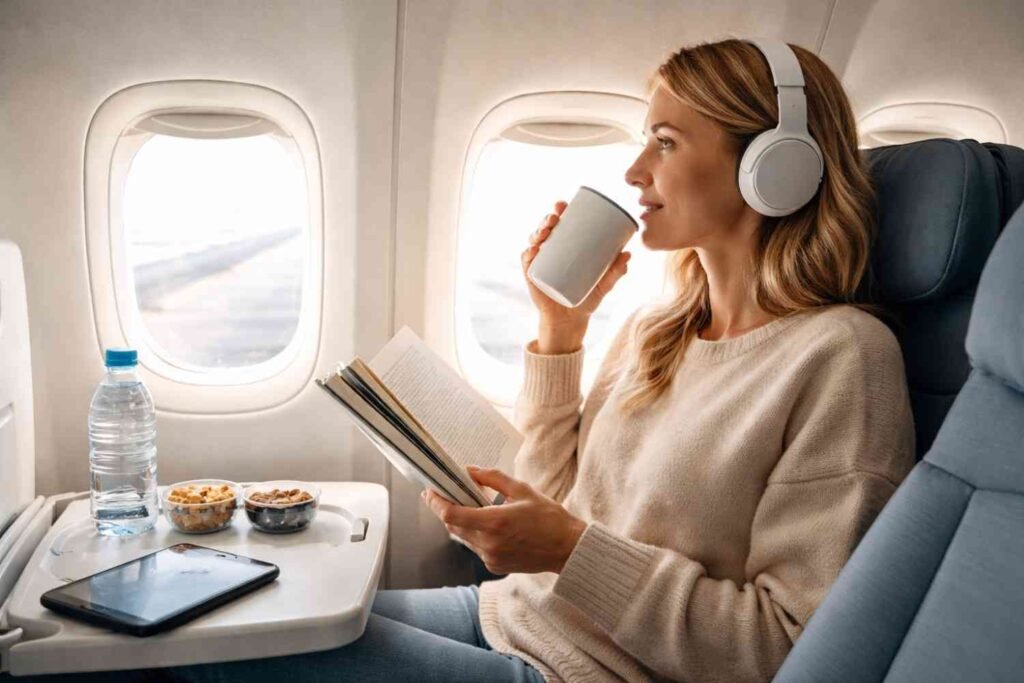
Hydration is one of the most effective tools you have. Airplane cabins are extremely dry, and dehydration intensifies fatigue, headaches, and irritability. A practical guideline that works well is drinking about eight ounces of water for every hour you’re in the air. This alone can noticeably reduce how drained you feel after landing.
Alcohol and caffeine are common in-flight habits that often backfire. Alcohol disrupts sleep quality, even if it makes you feel relaxed in the moment. Caffeine can delay your body’s natural clock, especially on afternoon or evening flights. Skipping both during the flight usually leads to smoother adjustment later.
Food choices matter as well. Heavy or greasy meals can cause bloating and digestive discomfort, which are often mistaken for jet lag symptoms. Lighter meals with fruits, vegetables, or lean options are easier on your system and help you feel more balanced when you arrive.
Light exposure is another critical factor. Your brain uses light as a primary cue for wakefulness. Bright cabin lighting and prolonged screen use can signal your body to stay alert when it shouldn’t. Wearing sunglasses or blue-light-blocking glasses, particularly on late flights, helps reduce unnecessary stimulation.
Movement helps counter travel fatigue. If you’re not sleeping, standing up, stretching, or walking the aisle improves circulation and reduces stiffness. Even small movements make a difference on longer domestic flights.
What to Do Immediately After You Land
The hours after landing are when domestic travelers can reset quickly. This is often where people either shorten jet lag or unintentionally extend it.
Natural sunlight is one of the strongest signals for resetting your internal clock. Spending 20 to 30 minutes outside after arrival helps your body align with local time. This is especially helpful after eastbound travel, where your body tends to lag behind.
Staying awake until local bedtime is challenging but effective. Long naps can delay adjustment and make nighttime sleep harder. If you absolutely need rest, keeping naps under 20 minutes prevents deeper sleep that disrupts your rhythm.
Eating on local time reinforces the shift. Your digestive system follows a schedule, too. Adopting the destination’s meal timing, even if it feels early or late, helps your body adapt more quickly.
Light exercise after arrival can improve alertness without overstimulating you. A brisk walk, light stretching, or a short workout helps maintain energy and supports better sleep later that night.
Simple Accessories That Actually Help
You don’t need complex gear, but a few practical items can make adjustments easier.
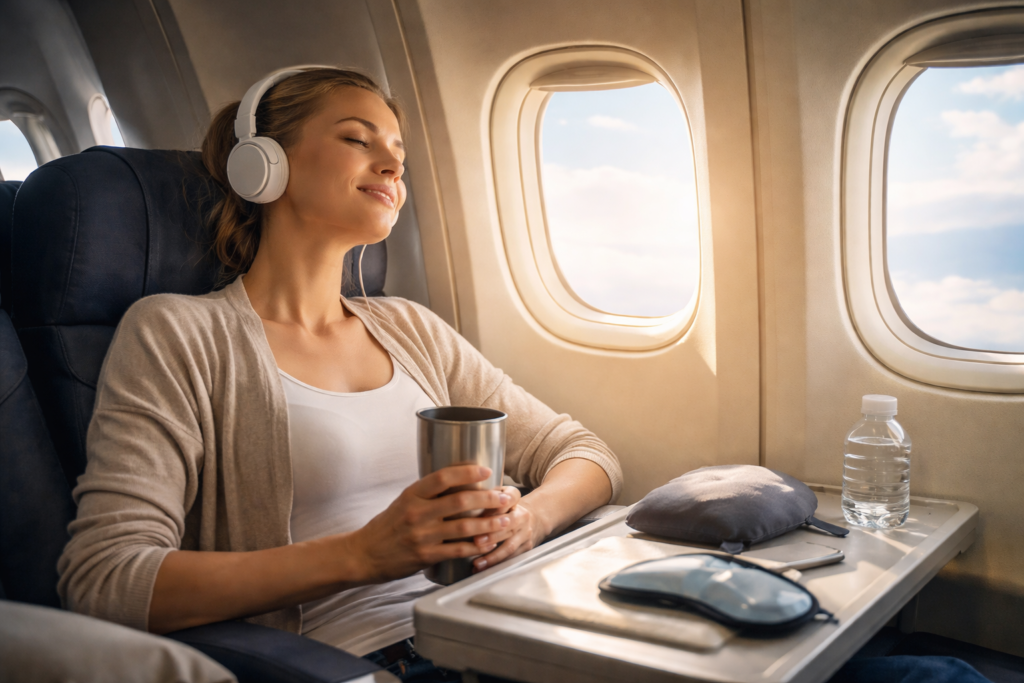
- Sleep kit: An eye mask, earplugs, and a travel pillow help if your flight aligns with nighttime at your destination
- Compression socks: Improve circulation and reduce leg swelling, which can contribute to fatigue
- Melatonin: Some travelers use it to signal sleep, but it should be taken cautiously and only after consulting a healthcare professional
Why These Strategies Work Without Changing Your Routine

What makes these the best ways to avoid jet lag on domestic flights is that they rely on signals your body already understands. Light exposure, hydration, food timing, and movement guide your internal clock naturally without forcing drastic changes.
Because domestic travel involves fewer time zones, your body doesn’t need aggressive intervention. Small, intentional choices often lead to noticeable improvements within 24 hours.
For business travelers, this means staying mentally sharp without overusing caffeine. For leisure travelers, it means enjoying the first day of a trip instead of recovering from it.
Frequently Asked Questions (FAQs)
1. Does jet lag really happen on domestic flights?
Yes. Even a one- or two-hour time difference can disrupt sleep and energy, particularly on eastbound or late-day flights.
2. Is it better to nap after a domestic flight?
Short naps can help, but long naps often delay adjustment and make it harder to sleep at night.
3. Do red-eye flights make jet lag worse?
They can. Managing light exposure and sleep quality becomes more important when flying overnight.
4. How long does domestic jet lag usually last?
For most people, symptoms fade within one to two days when hydration, light exposure, and meal timing are managed well.
Final Thoughts
Jet lag on domestic flights is more common than many people realize, but it doesn’t need to disrupt your plans. You don’t have to overhaul your routine or prepare days in advance. The most effective changes happen during the flight and in the hours right after you land.
With a few intentional adjustments, you can arrive feeling functional and settle into local time faster, whether you’re traveling for work or heading out on a short getaway.