
A front yard needs to look good from the street and feel welcoming on the walk to the door. In Austin, shade, plant selection, and water needs also influence the plan. Starting with the approach to the house helps you decide where paths, seating, and planting will be most useful.
For homeowners evaluating landscape design services in Austin, the real question is not whether the yard should look attractive. It is how the design will guide movement, create usable shade, and make the home read well from the curb all year. Southern Landscape approaches that challenge as a design problem first and a construction problem second, which is usually the right order for a front yard that needs to feel intentional rather than pieced together.
The Front Yard Should Be Experienced, Not Just Seen
Many front yards fail because they are treated like a static picture. They may look fine from the sidewalk, but they do not support the experience of coming home. A strong Austin front yard should shape the walk from the street, slow the transition to the entry, and give the house a more settled, finished presence.
That means the design should consider how a person moves from curb to door. A direct path is not always the best path. Sometimes a slight turn, a landing, or a change in material gives the entry more dignity. Sometimes a low wall or planting edge helps the approach feel anchored. These are small choices, but they change how the property is perceived.
Arrival Is a Design Sequence, Not a Single Feature
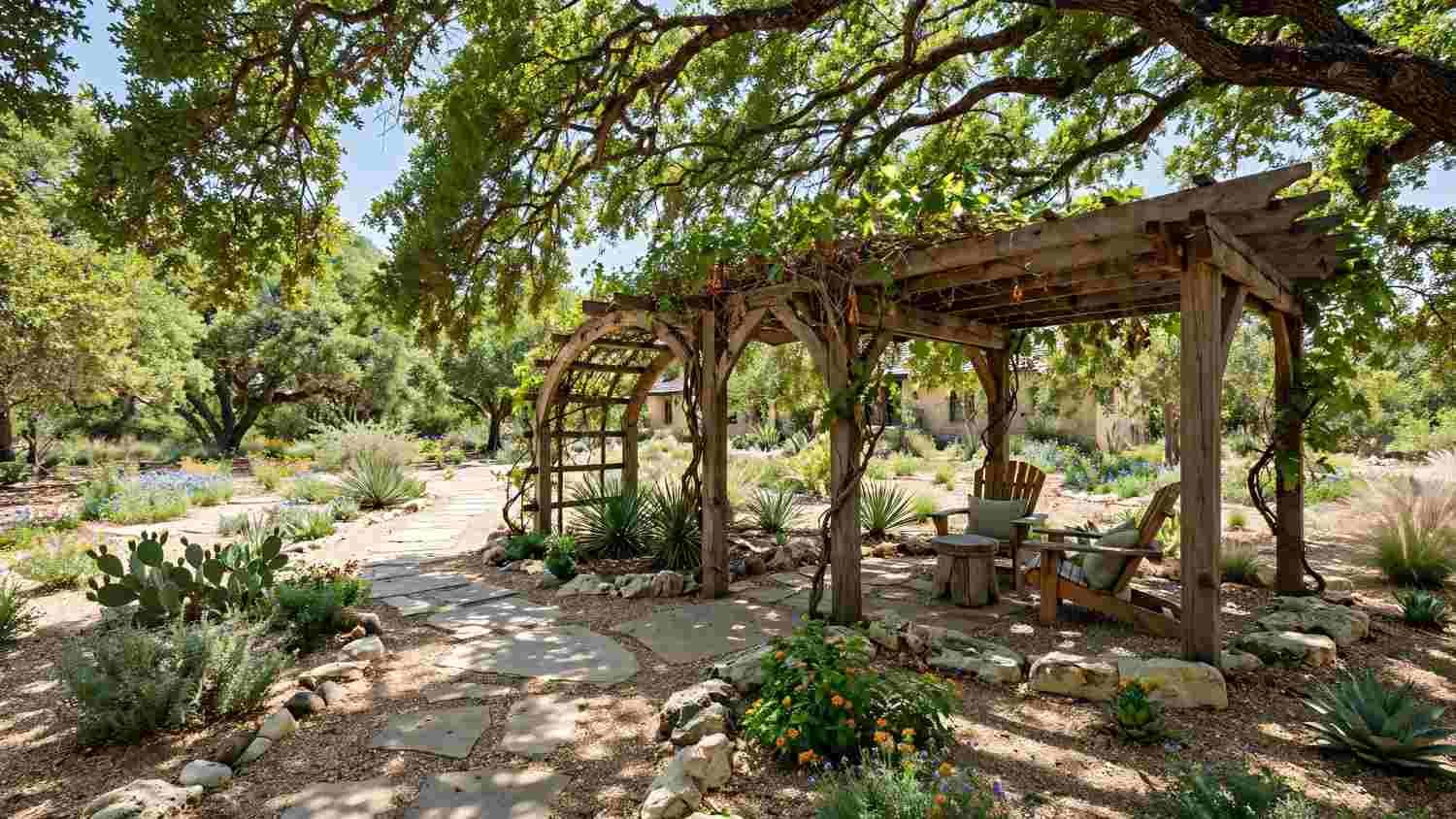
The arrival sequence includes the driveway edge, the walkway, the planting around the entry, and the way light and shade shift across those elements. When those pieces are coordinated, the front yard feels calm and composed. When they are not, the result can feel abrupt or unfinished.
Southern Landscape often works from that sequence outward. A paver walkway may be paired with stone steps, restrained planting, and low architectural lighting so the front path reads clearly at night and in daylight. The point is not decoration for its own sake. The point is to make the approach feel logical, inviting, and durable.
Shade Has to Be Designed for Austin, Not Added Later
In Central Texas, shade is not a luxury layer. It is part of the functional design. A front yard that is exposed to intense afternoon sun can feel harsh, sparse, and uncomfortable. Shade changes that. It softens hardscape, protects plant material, and makes the entry usable rather than merely visible.
The mistake many projects make is treating shade as an afterthought. A tree planted without regard to canopy spread, a pergola placed without relation to the walkway, or a planting bed that dries out too fast can all undermine the original concept. The better approach is to design shade into the composition from the beginning.
Arbors, Pergolas, and Tree Canopy Should Work Together
One shade structure on its own can help, but the stronger move is to coordinate built shade with living shade. An arbor or pergola can mark the transition to the front door, create relief over a sitting area, or visually lower the scale of a tall facade. Trees can then extend that effect over time, creating broader filtered shade across the yard.
That combination matters because it gives the design both immediate and long-term structure. Built elements provide day-one definition. Planting provides maturity. Southern Landscape’s design-build approach is useful here because the firm can align masonry, carpentry, lighting, and softscaping in one plan instead of forcing each element to compete for attention.
Street Views Demand More Discipline Than Backyard Design
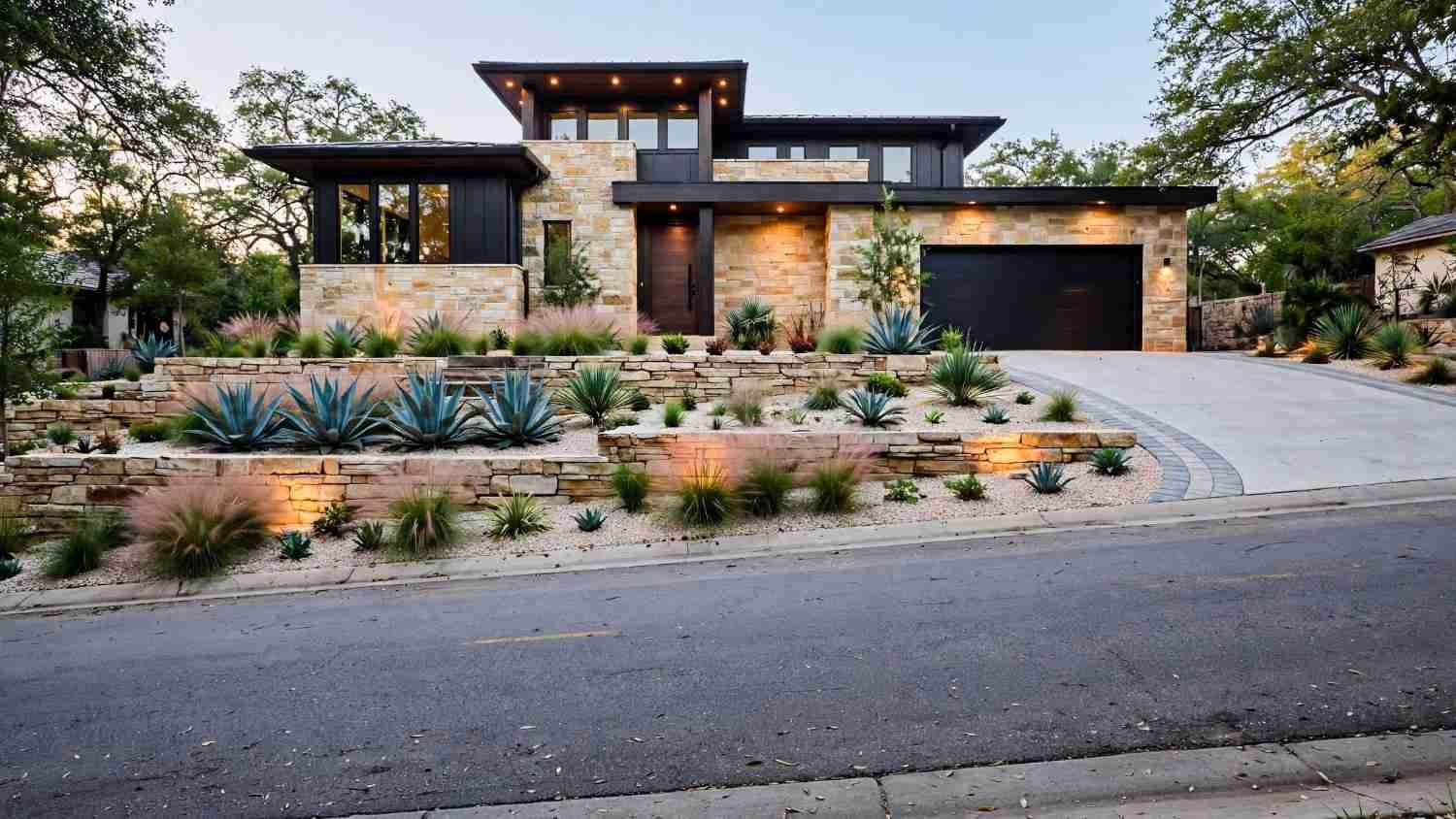
A backyard can be forgiving. A front yard is not. It has to look coherent from multiple distances and angles, including the street, the driveway, and the front door itself. That means the design must balance openness and privacy, simplicity and detail, and height and restraint.
The most effective front yards usually do not try to do everything. They choose a few strong moves and carry them through consistently. A repeated stone material, a limited plant palette, and one or two focal elements will usually read better than a crowded mix of features. The home then appears more settled, not more decorated.
A useful way to think about street view is to ask three questions:
- What is the first thing a driver notices from the street?
- What details become visible as someone walks closer?
- What remains attractive after the eye leaves the entry and scans the whole facade?
Those questions help identify whether the front yard has a real hierarchy. Without hierarchy, the eye has nowhere to rest. With it, the house looks more composed and intentional.
Hardscaping Sets the Frame
In front-yard work, hardscaping is often the most visible decision because it creates the structure everything else follows. Paver walkways, retaining walls, steps, and stone edges all shape how the front yard reads from a distance. They also communicate permanence. That is especially valuable in Austin, where a design needs to feel grounded in the site rather than placed on top of it.
Southern Landscape brings value here because it can manage the hardscape and the planting plan together. When stonework and planting are designed separately, the result often feels disconnected. When they are developed as a single system, the front yard has a more unified visual rhythm.
Climate-Appropriate Planting Makes the Design Hold Up
A front yard in Austin needs more than curb appeal at installation. It needs a plan that can tolerate heat, reflect the character of the site, and avoid constant correction. That is where xeriscaping and irrigation become design tools rather than maintenance afterthoughts.
The strongest front-yard plantings are usually not the most crowded. They are the ones with enough spacing to mature gracefully, enough variation to keep the composition interesting, and enough drought awareness to remain practical. In a climate like Austin’s, that often means choosing plants and materials that work with the conditions instead of resisting them.
Southern Landscape’s approach to xeriscaping is valuable in front-yard settings because it supports a cleaner architectural look. Gravel, stone, and carefully placed plant massing can create a sharp visual frame without relying on high-water planting schemes that are difficult to sustain.
Irrigation and Layout Should Be Planned Together
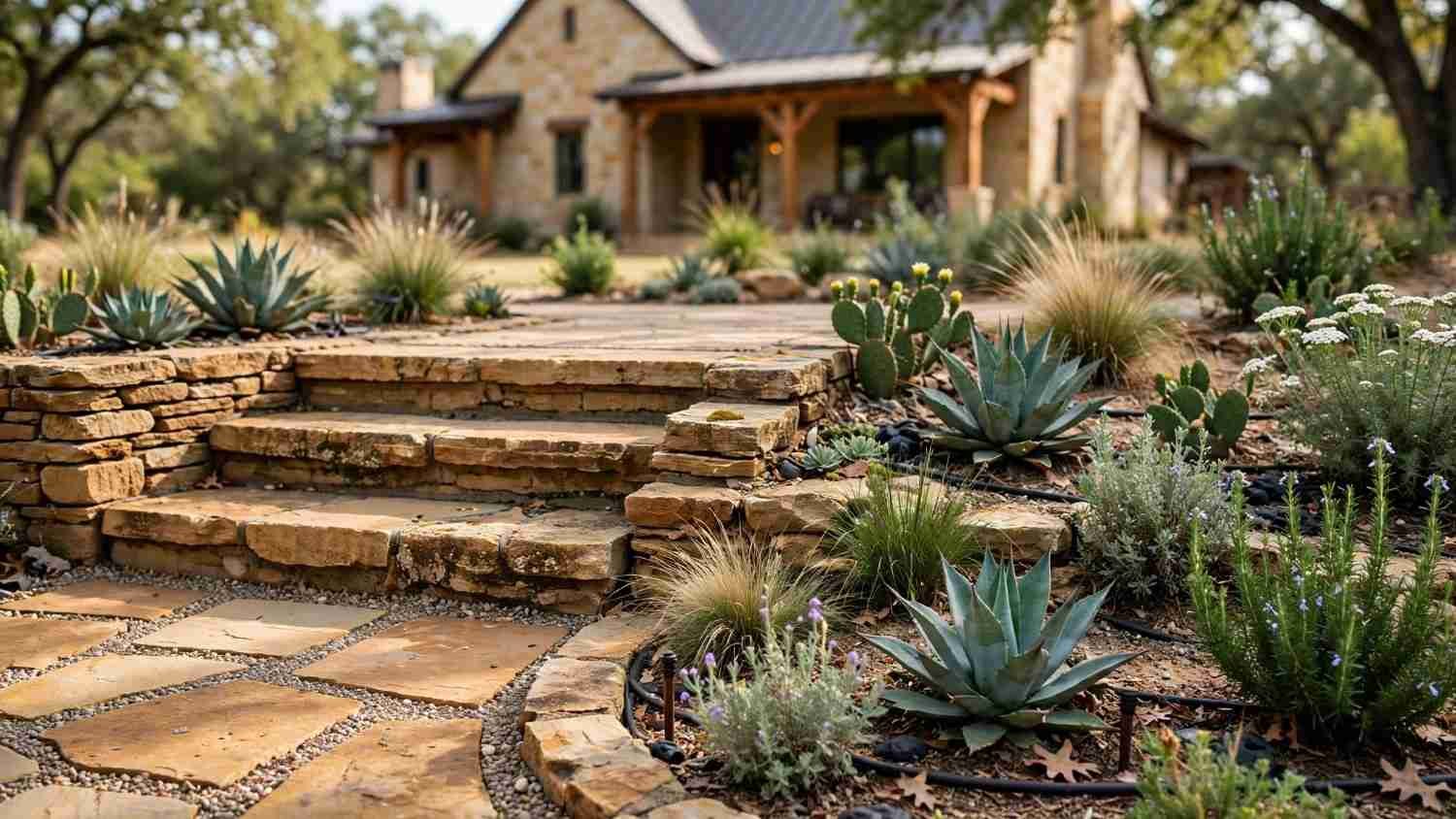
A well-designed front yard should not force irrigation to compensate for a poor layout. If beds are fragmented, planting zones are inconsistent, or material transitions are awkward, irrigation becomes harder to manage. When the layout is cleaner, the system can be more efficient and the planting can perform more predictably.
That is one reason a design-build firm is useful for front yards. Southern Landscape can align irrigation, masonry, planting, and lighting inside one coordinated process. The result is not just a nicer first impression. It is a front yard that is easier to keep consistent over time.
Why Southern Landscape’s Process Matters for Front Yards
Front-yard projects benefit from continuity. Too many handoffs can dilute the original idea before construction even begins. Southern Landscape’s five-step design-build process helps avoid that problem by keeping one designer involved from the initial conversation through budgeting and construction. That continuity matters when the project depends on precise relationships between arrival, shade, and street view.
It also matters that Southern Landscape has been working in Austin and the Hill Country since 1982. That kind of experience shows up in judgment. It is the difference between a design that looks good in a rendering and one that still makes sense once it is built, lived with, and maintained through changing seasons.
The company’s in-house capabilities are also relevant. With masonry, carpentry, welding, irrigation, and softscaping handled internally, the design is less likely to drift during execution. For a front yard, that can be the difference between a tidy concept and a finished result that truly matches the intent.
A front yard designed well should do more than improve the view from the street. It should make coming home feel more defined, more comfortable, and more complete. If that is the goal, the smartest move is to treat the project as an integrated system, not a collection of separate upgrades. Homeowners can discuss those priorities with Southern Landscape before deciding which features to include.