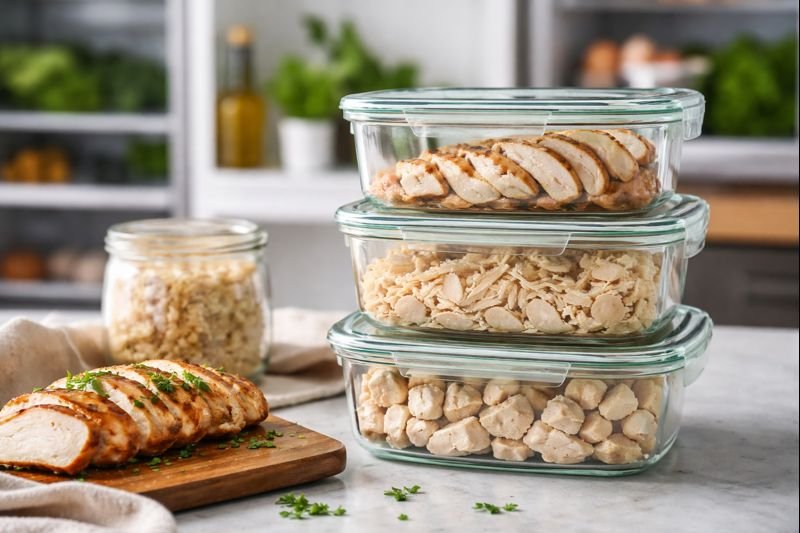
Batch-cooking chicken used to feel like a cheat code in my kitchen until I ruined a whole week’s worth by storing it wrong. Dry edges, weird fridge smells, and that moment of doubt before reheating. If you cook in batches, you already know the goal isn’t just convenience. It’s keeping chicken safe, juicy, and worth eating on day three.
The best way to store cooked chicken comes down to a few non-negotiables: how fast you cool it, how you seal it, and how intentionally you plan fridge versus freezer time. Get those right, and batch cooking actually saves time and money instead of quietly wasting both.
Why Cooling Speed Matters More Than Anything Else
Most food safety problems don’t start in the fridge; they start before food ever gets there. Cooked chicken sits in a temperature range where bacteria multiply fast if you let it linger.
The mistake I see most often is dumping hot chicken into one deep container and calling it done. That center takes too long to cool, and that’s where trouble starts. The more brilliant move is spreading the heat out so cooling happens quickly and evenly.
Here’s the approach that works best in home kitchens:
- Divide cooked chicken into shallow containers no deeper than about two inches
- Refrigerate or freeze within two hours of cooking (one hour if it’s hot outside)
- Leave lids slightly cracked until the chicken fully cools to release steam
This single habit protects texture and safety simultaneously. Faster cooling means less moisture loss and fewer food safety risks.
Understanding Storage Timelines Without Guesswork
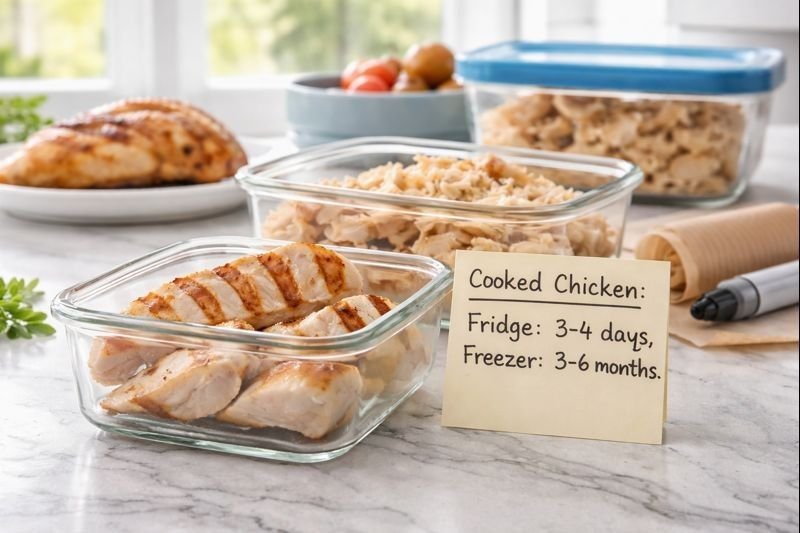
Batch cooking only works if you’re honest about how long food actually stays good. Chicken doesn’t suddenly turn bad overnight, but quality drops fast once you push past safe windows.
In a standard refrigerator set at or below 40°F, cooked chicken holds up best for three days. It may still be safe on day four, but flavor and texture usually aren’t worth the gamble. Freezing, on the other hand, buys you real flexibility if you do it right.
For batch cookers, this fridge-first, freezer-second mindset works consistently well:
- Keep what you’ll eat within three days in the fridge
- Freeze everything else the same day it’s cooked
- Treat the freezer as part of your meal plan, not a backup
This approach is at the heart of the best way to store cooked chicken when you’re cooking ahead for busy weeks.
Choosing Containers That Actually Protect Your Food
Not all containers are doing you favors. The wrong lid or thin plastic can dry chicken out or pull in fridge odors that make leftovers unappetizing.
Airtight containers matter more than material, but glass and heavy-duty plastic tend to hold seals better over time. If chicken is going into the freezer for more than a month or two, it needs extra protection.
To keep texture intact during longer storage:
- Press out as much air as possible before sealing
- Overwrap with freezer paper or foil for long freezes
- Use freezer-rated bags only after removing excess air
Labeling sounds boring, but it’s part of how batch cooking stays stress-free. Date everything and note that it’s cooked chicken. No guessing games later.
Fridge Versus Freezer: Make the Decision Early
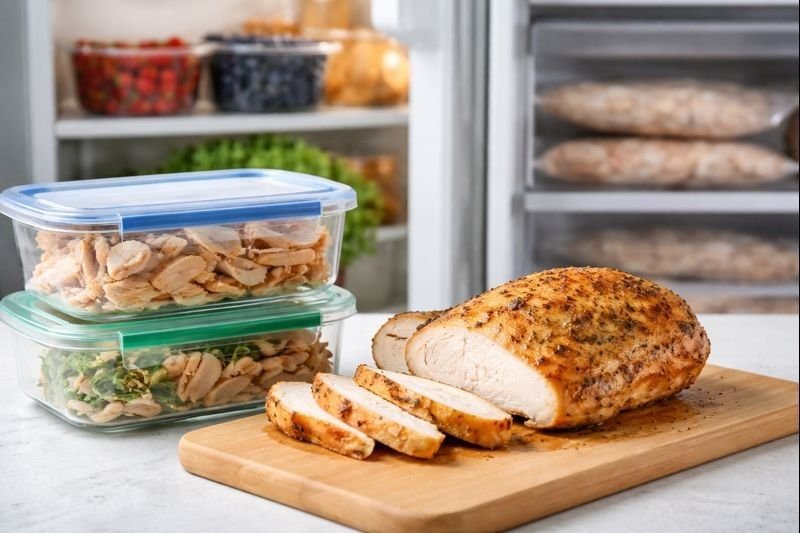
One of the biggest batch-cooking mistakes is waiting to decide what to freeze. Every extra day in the fridge reduces freezer quality later. Chicken frozen on day one tastes dramatically better than chicken frozen on day four.
Suppose your plan includes freezing and portioning immediately after cooling. Think in meal-sized amounts instead of bulk storage. Smaller portions thaw faster, reheat more evenly, and reduce repeated temperature changes.
This planning step is what separates casual leftovers from intentional batch cooking.
Reheating Without Turning Chicken Into Cardboard
Even perfectly stored chicken can be ruined at the reheating stage. High heat and no moisture are the fastest ways to suck the life out of it.
Before reheating, add a small splash of chicken broth or water to the container. Cover loosely so steam stays in, but pressure doesn’t build. Always reheat only what you plan to eat. Repeated reheating cycles damage quality and increase risk.
No matter how you reheat, chicken should reach an internal temperature of 165°F. A basic food thermometer is one of the most underrated tools in a batch-cook kitchen.
The Batch-Cooking Mindset That Actually Works Long Term
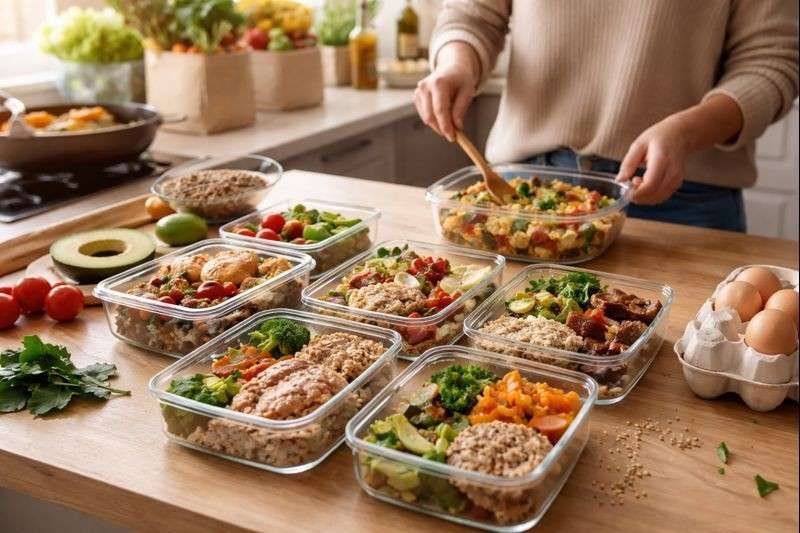
The best way to store cooked chicken isn’t just about containers and temperatures. It’s about planning your week realistically. If you’re cooking on Sunday for the entire workweek, freezing part of that chicken immediately isn’t overkill; it’s smart.
Think in waves: three days fresh, the rest frozen. Rotate freezer portions forward midweek. This rhythm keeps food tasting fresh while protecting safety, and it’s how batch cooking stays sustainable instead of overwhelming.
Common Mistakes That Quietly Ruin Stored Chicken
Some problems don’t show up until it’s too late. Avoiding these makes a bigger difference than fancy gear:
- Storing chicken while still steaming hot
- Packing large amounts into deep containers
- Freezing chicken after it’s already been refrigerated for several days
- Reheating the same portion multiple times
Fixing even one of these habits noticeably improves results.
Frequently Asked Questions (FAQs)
1. How long does cooked chicken last in the fridge in the US?
When stored at or below 40°F, cooked chicken is best used within three days for quality, though it may remain safe up to four days if handled properly.
2. Is it better to freeze cooked chicken right away?
Yes. Freezing chicken the same day it’s cooked preserves moisture and flavor far better than freezing it after several days in the fridge.
3. Can I store cooked chicken in meal-prep containers?
You can, as long as the containers are airtight and shallow enough to allow quick cooling. Poor seals lead to dryness and odor absorption.
4. What’s the safest way to reheat stored chicken?
Add moisture, reheat only once, and always bring chicken to an internal temperature of 165°F before eating.
Final Thoughts
Batch cooking chicken should make life easier, not riskier or less appetizing. Once you understand cooling speed, storage timelines, and smart reheating, everything clicks into place. The process stops feeling rigid and starts feeling intuitive, like second nature in your kitchen. That’s when batch cooking becomes a real habit instead of a short-term experiment.
A little planning up front saves time, money, and frustration later. Done right, it’s one of the simplest upgrades you can make to everyday cooking.